BUILD CLARITY, CONFIDENCE AND LEADERSHIP IN HOW YOU LIVE AND WORK
A coaching and speaking approach combining professional training, lived international experience and a lifelong background in wellness - bridging physical and mental wellbeing to help people lead with clarity, resilience and emotional intelligence.
There are three ways to work together, depending on your goals - whether you're looking for personal clarity, team development, or a broader shift in how leadership is understood and applied.
MEET FABIENNE
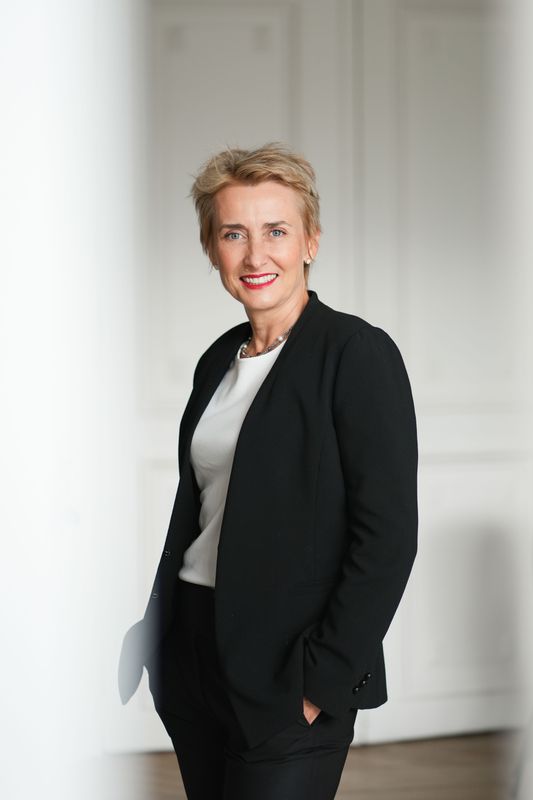
Fabienne works at the intersection of leadership development, wellbeing and real-world experience, helping individuals and organisations navigate complexity with greater clarity and confidence.
With a background spanning international corporate environments, wellness, and leadership development, Fabienne combines structured methodology with lived experience to support people in thinking clearly, leading effectively, and building sustainable resilience - both personally and professionally.
CLIENT EXPERIENCES
1:1 COACHING
Coaching is designed to meet you where you are - whether you're looking for clarity, building resilience, or stepping into more confident leadership. Each package provides a structured starting point, with the flexibility to adapt based on what you need.
WORKSHOPS & TRAINING

Designed for organisations looking to strengthen leadership, communication and team dynamics.
Focus areas include:
- Emotional intelligence in leadership
- Communication across teams and generations
- Managing stress and building resilience
- Developing confident, effective managers
Each session is tailored to the organisation, combining insight with practical application.
WHO I’VE WORKED WITH





















BOOK A DISCOVERY CALL NOW

If you're looking to build clarity, strengthen leadership or explore working together, get in touch below.
AUTHOR OF UNAPOLOGETICALLY BOLD
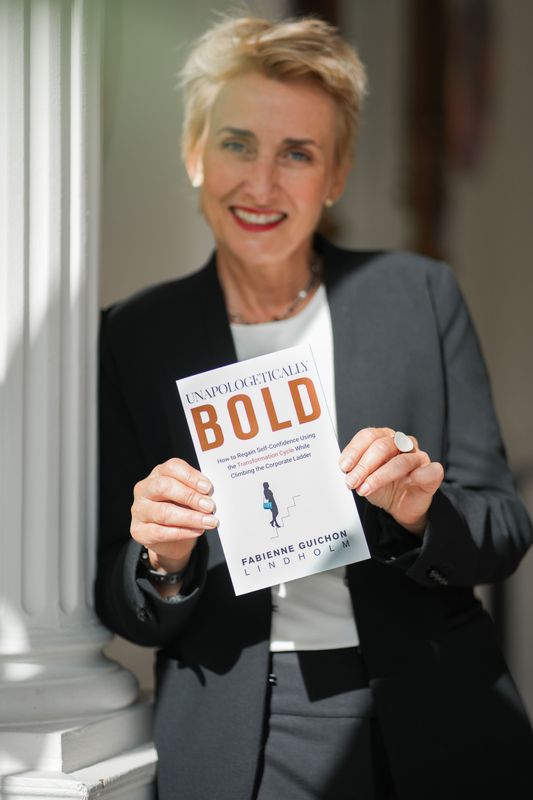
Author of Unapologetically Bold, introducing the Transformation Cycle - a practical framework to help individuals move from uncertainty to clarity and action.
This method underpins much of the work across coaching, workshops and speaking.
BLOG
Practical thinking and reflections on leadership, clarity and emotional intelligence.

Emotional Intelligence or EQ
The Leadership Skill Most People Think They Have
Emotional Intelligence, or EQ, has become one of the most discussed leadership skills in modern business. Yet one of the greatest ironies of EQ is this: most people believe they are more emotionally aware than they actually are.
EQ is not simply about “being nice” or “understanding feelings.” It is the ability to recognize, understand, manage, and influence emotions — both in ourselves and in others. Daniel Goleman’s framework breaks EQ into four categories: self-awareness, self-management, social awareness, and relationship management, for a total of 17 skills.
In my opinion, the challenge is that each category requires honesty, humility, and continuous growth. Below you will find some of the skills I consider essential.
1. Self-Awareness: Accurate Self-Assessment Is Harder Than We Think
Self-awareness is the foundation of Emotional Intelligence. It is the ability to recognize our emotions, triggers, behaviors, and impact on others.
But accurate self-assessment is extremely difficult.
Research published in the Journal of Intelligence on the Dunning-Kruger effect shows that people’s self-estimates only moderately correlate with objective performance measures, and many individuals consistently rate themselves above average. In simple terms: humans are not naturally good at evaluating themselves accurately. (pmc.ncbi.nlm.nih.gov)
This is why leadership blind spots exist.
A manager may believe they are approachable while their team experiences them as intimidating. A leader may think they communicate clearly while their employees leave meetings confused and disengaged.
True self-awareness often requires external feedback.
This is where coaching becomes essential. A skilled coach helps identify patterns we cannot see ourselves, challenges limiting beliefs, and creates the psychological safety necessary for honest reflection.
Without feedback, most people stay trapped in their own perception of themselves. And perception is not always reality.
2. Self-Management: Adaptability and Transparency
Once we become aware of our emotional patterns, the next step is learning how to manage them.
Two of the most powerful — and difficult — skills within self-management are adaptability and transparency.
Adaptability
Adaptability is the ability to remain flexible during uncertainty, pressure, or change.
In today’s workplace, leaders who cannot adapt quickly become rigid, reactive, and resistant. Adaptability requires a growth mindset: the belief that skills, intelligence, and leadership abilities can be developed.
This sounds simple in theory.
In reality, it means being willing to admit:
- “I don’t know.”
- “I made a mistake.”
- “There may be a better way.”
That level of humility is uncomfortable for many leaders.
Transparency
Transparency is often misunderstood.
It does not mean oversharing emotions or removing professional boundaries. Transparency means being authentic, honest, and appropriately vulnerable.
People do not trust perfection. They trust honesty.
When leaders acknowledge challenges, communicate openly, and admit mistakes, they create credibility and psychological safety within their teams.
Vulnerability is not weakness. It is courage.
3. Social Awareness: Empathy Is Not Sympathy
One of the most misunderstood aspects of Emotional Intelligence is empathy.
Many people confuse empathy with sympathy, but they are very different.
Sympathy is feeling sorry for someone.
Empathy is understanding and connecting with what another person is experiencing without necessarily agreeing with them.
For example:
- Sympathy says: “I feel bad for you.”
- Empathy says: “I understand why this situation feels difficult for you.”
Imagine an employee who is struggling after receiving critical feedback.
A sympathetic leader may avoid the conversation entirely to protect the employee’s feelings.
An empathetic leader listens, acknowledges the discomfort, and still helps the employee grow.
Empathy is not about rescuing people. It is about understanding them.
This distinction matters because leaders who confuse empathy with sympathy often become either emotionally detached or overly accommodating.
Emotionally intelligent leaders balance compassion with accountability.
4. Relationship Management: Influence and Conflict Management
Relationship management is where Emotional Intelligence becomes visible in leadership.
Two essential skills in this category are influence and conflict management.
Most people think influence means convincing others.
It does not.
True influence is not pushing people toward an idea.
It is pulling people into a shared vision, movement, or direction.
Great leaders create emotional engagement. They inspire trust, purpose, and momentum.
People follow them not because they are forced to, but because they want to. That is a major difference.
Influence is built through credibility, emotional connection, clarity, and consistency.
And finally, conflict management.
Conflict itself is not the problem. Avoiding conflict is.
Emotionally intelligent leaders address tension early, communicate directly, and remain calm under pressure. They seek understanding before reaction and solutions before blame.
Healthy conflict, managed well, often leads to stronger communication, deeper trust, and better performance.
Emotional Intelligence is not a personality trait.
It is a skill set.
And like any skill, it can be developed.
If you want to strengthen your Emotional Intelligence, leadership presence, communication, or self-awareness, I invite you to contact me to explore coaching, mentoring, or leadership development opportunities.
Because leadership begins with understanding yourself

Clarity
Clarity: The Difference Between Staying Stuck and Moving Forward
There are moments in life—both professionally and personally—when everything feels blurred. You know something isn’t right, yet you can’t quite define it. Decisions feel heavier than they should. Conversations become strained. Progress slows, or worse, stops entirely. This is what I call the fog.
One of the most common phrases that emerges in this state is: “I don’t know.”
“I don’t know what I want.”
“I don’t know what to do.”
“I don’t know how to fix this.”
While it may sound like uncertainty, it is often something deeper. It is not always that we don’t know—it is that we are not clear enough to access the answer. The fog disconnects us from our own thoughts, emotions, and needs. Saying “I don’t know” becomes a protective response, a way to avoid making the wrong decision when everything feels uncertain.
Operating in the fog has a real cost.
In the workplace, it shows up as indecision, second-guessing, and misalignment. Leaders hesitate, teams lose direction, and opportunities are missed—not because of a lack of competence, but because of a lack of clarity. When your mind is cluttered, even simple decisions become complex. You may delay taking action, overanalyze situations, or choose the safest path rather than the right one.
On a personal level, the impact can be even more profound. Relationships suffer when we are unclear about what we feel, need, or expect. When “I don’t know” becomes the default answer, communication weakens. Conversations stay on the surface, important topics are avoided, and emotional distance grows. It becomes difficult to fix what is broken—because you cannot address what you cannot clearly see or express.
Clarity is not just about “figuring things out.” It is about removing the noise that prevents you from seeing what truly matters. It creates space in your mind, allowing you to reconnect with your intuition, your logic, and your emotional intelligence. When clarity is present, decisions feel lighter—not because they are easier, but because they are aligned.
And this is where values come in.
Your values act as your internal compass. They define what matters most to you, what you stand for, and what you are no longer willing to tolerate. When you are clear on your values, decision-making becomes significantly more straightforward. Instead of asking, “What should I do?”, you begin to ask, “What aligns with who I am and what I believe in?”
For example, if one of your core values is respect, you will quickly recognize when a professional environment or personal relationship is misaligned. If growth is a value, staying in a stagnant role will naturally feel uncomfortable. Values remove ambiguity—they guide you toward decisions that feel coherent and sustainable over time.
However, values are not static.
They evolve as you do. Life experiences—successes, failures, transitions, and challenges—shape and refine what is truly important to you. What mattered deeply five years ago may no longer hold the same weight today. This is why revisiting your values regularly is essential.
I recommend a structured values exercise every two years. This is not a superficial reflection, but a deliberate process of reassessing your priorities, identifying shifts, and redefining what drives your decisions. It allows you to move beyond “I don’t know” and replace it with clarity, direction, and confidence.
When your values are clear, clarity follows.
You move from confusion to direction. From hesitation to decision. From “I don’t know” to “this is what I choose.” From tension to alignment. Whether you are navigating a career move, managing a team, or working through a personal relationship, clarity becomes your foundation for thoughtful and confident action.
If you are currently feeling stuck, uncertain, or overwhelmed by choices, it may not be a lack of capability—it may simply be a lack of clarity.
And clarity can be created.
If you would like to reconnect with your values and use them as a powerful decision-making tool, I invite you to reach out. I offer guided value exercises designed to help you cut through the fog, realign with what truly matters, and move forward with confidence and purpose.
What's in for you, in the package:
2 months of personalized hybrid coaching
Goal and objective setting
Action plan development
Ongoing support via WhatsApp

Mental Fitness and Positive Intelligence
Unlocking Performance, Relationships, and Well-Being
Work life is uncertain, demanding, and stressful, while many professionals find themselves stuck in cycles of stress, self-doubt, and underperformance, despite their skills and experience. What often stands in the way is not a lack of capability, but the presence of internal mental saboteurs. This is where Positive Intelligence (PQ) coaching becomes a powerful catalyst for transformation.
Positive Intelligence is a mental fitness framework that helps individuals identify and neutralize the internal voices that sabotage their success, while strengthening the part of the brain that drives clarity, resilience, and purposeful action. The result is not just improved performance, but a profound shift in how we experience our work, relationships, and overall well-being.
Elevating Performance Through Mental Fitness
High performance is not only about strategy and execution—it is deeply connected to mindset. PQ coaching trains individuals to recognize when their saboteurs are taking over and to shift into a more focused, calm, and resourceful state. This allows for better decision-making, increased productivity, and greater creativity.
Instead of reacting impulsively under pressure, individuals learn to respond with intention. They become more agile, more confident, and better equipped to handle complex challenges. Over time, this creates a sustainable form of performance—one that is not driven by stress, but by clarity and purpose.
Transforming Relationships
One of the most immediate and visible benefits of PQ coaching is the impact on relationships. Whether in leadership roles, team environments, or personal life, our internal patterns shape how we communicate and connect with others.
Two of the most common saboteurs—the Pleaser and the Avoider—play a significant role here. The Pleaser seeks acceptance and validation, often at the expense of their own needs, leading to burnout and unspoken resentment. The Avoider, on the other hand, tends to sidestep difficult conversations or situations, which can create misunderstandings and limit growth.
Through PQ coaching, individuals become aware of these patterns and learn to shift toward more authentic and constructive behaviors. Communication becomes clearer, boundaries healthier, and relationships more balanced and fulfilling.
Enhancing Well-Being and Inner Peace
Perhaps the most profound transformation happens internally. PQ coaching helps people move away from constant mental noise—self-criticism, worry, and overthinking—and toward a state of calm and presence.
This shift brings a deep sense of clarity and peace. Instead of being driven by fear or external expectations, people reconnect with what truly matters to them. They gain a clearer vision of their goals, values, and priorities, both professionally and personally.
The result is not just reduced stress, but an increased sense of joy, fulfillment, and control over one’s life.
A Personalized and Structured Approach
As an accredited Positive Intelligence coach, I guide clients through a structured yet highly personalized journey. My coaching packages are designed to meet you where you are, whether you are seeking to improve leadership effectiveness, navigate a transition, or simply regain a sense of balance and clarity.
Sessions are available in both French and English, ensuring a comfortable and impactful experience for each individual.
Client Testimonial
*”Working with Fabienne has been a turning point in my life. I was constantly overwhelmed, stressed and feeling conflicts around me. Through PQ coaching, I became aware of my saboteurs and learned how to set boundaries without guilt. Today, I feel more confident, focused, and at peace—both at work and at home.”*
Take the First Step
If you are ready to elevate your performance, strengthen your relationships, and experience a greater sense of well-being, PQ coaching can provide the tools and support you need.
I invite you to take the first step by reaching out through the online contact form on my website. Let’s explore how you can move from self-sabotage to self-command—and create a life and career aligned with who you truly are.
What's in for you, in the package:
6 months of personalized coaching
Hybrid coaching and mentoring sessions following the POSITIVE INTELLIGENCE methods
Access to the PQ application - 15 min exercise daily
Mental strengthening and building sessions
Ongoing support via WhatsApp
Leading from Within
Why CEOs and Entrepreneurs Should Trust Their Intuition
In an era where data is king and decisions are increasingly driven by dashboards, algorithms, and predictive models, a quiet force is making a comeback in boardrooms and startups alike: intuition.
A recent study by researchers Leonie Hallo and Tiep Nguyen examines how senior leaders—CEOs, entrepreneurs, and executives—actually make decisions in complex, high-pressure environments. Spoiler alert: it’s not all about spreadsheets.
This post distills the insights from their research into practical takeaways for today’s business leaders who are ready to trust what they feel, not just what they see.
What Intuition Really Is (and What It Isn’t)
Forget the stereotype of intuition as magical or irrational. In leadership, intuition is rapid, experience-based, and subconscious pattern recognition. It’s what happens when your mind connects dots your conscious brain hasn’t caught up with yet.
Think of it as:
- A gut feeling that something’s off, even when the numbers look fine.
- A sudden insight that hits you in the shower or at 3 AM.
- A deep sense of knowing based on years of experience, even if you can’t explain it (yet).
The Science Behind “Just Knowing”
Psychology calls this dual-process thinking:
- System 1 (Intuition) is fast, emotional, and automatic.
- System 2 (Analysis) is slow, logical, and deliberate.
Top leaders don’t pick one—they use both. The key lies in understanding when to lean into each. In the study, most executives started with a gut feeling and then validated it with analysis, or vice versa.
How Leaders Really Use Intuition
The researchers interviewed 34 senior leaders across industries—from construction to finance to healthcare. Here’s what they revealed:
- Most blend intuition and analysis, using gut feeling to start or finalize decisions.
- A few trust intuition entirely, especially in fast-moving or people-centered decisions.
- Some rely on data first, but note that intuition kicks in when clarity is missing.
- Physical cues—tightness in the chest, a stomach drop, a warm sense of “rightness”—often signal intuitive insights.
And when leaders follow these instincts? They rarely regret it.
Intuition Loves Complexity
When a problem is vague, high-risk, or emotionally charged, intuition excels:
- You’re dealing with people, not just numbers.
- There’s no precedent or perfect data.
- The path forward isn’t clear.
In those moments, intuition steps in as your internal compass, offering clarity when logic hits a wall.
A Framework for Modern Decision-Making
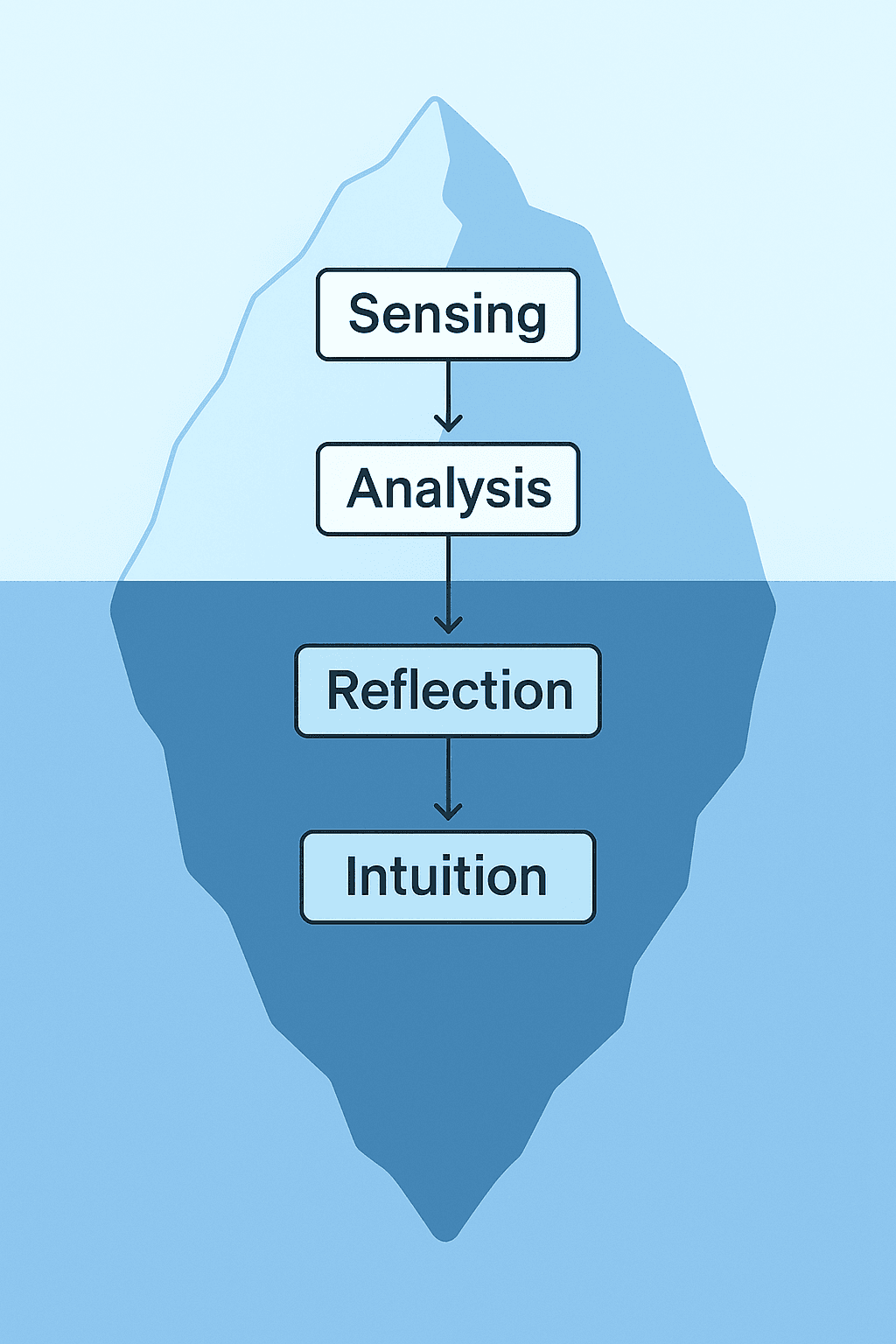
The study proposes an “iceberg model” of decision-making:
- Start at the surface: Scan facts, data, and external inputs.
- Dive below: Reflect, feel, and tune into your subconscious cues.
- Resurface with clarity: Combine both for an aligned, confident decision.
This model encourages executives to intentionally integrate intuition and analysis, especially in turbulent environments.
How to Strengthen Your Intuition as a Leader
- Make space for silence—walk, meditate, unplug. Your best ideas don’t come from being busy.
- Track your instincts – Jot down gut reactions and follow up. What did your intuition get right?
- Learn your signals – Notice where you feel intuition in your body. Is it your chest? Gut? Throat?
- Check your “why” – Is that feeling rooted in experience or emotion? Learn to discern.
- Use it in people’s decisions – Hiring, firing, partnerships—data can’t always see character.
From Paradox to Power: Intuition + Analysis
When your logic says one thing and your intuition says another, you’re not broken—you’re at a creative crossroads.
The paper suggests embracing this paradox. Leaders who do this well:
- Switch between “cognitive gears”
- Use intuition to spark ideas and analysis to refine them
- Stay open to complexity, instead of forcing a binary choice
This isn’t about choosing sides. It’s about becoming ambidextrous in your thinking—leading from the head and the heart.
Why It Matters Now More Than Ever
In a world of AI, automation, and overwhelm, the competitive edge isn’t more data—it’s better judgment.
And judgment, as this research shows, is as much felt as it is calculated.
So if you’re an entrepreneur staring at a fork in the road, or a CEO wrestling with a people problem no KPI can solve, pause. Ask yourself not just, What do I know? But also, what do I sense?
If you’re ready to make smarter, more confident decisions by reconnecting with your intuition:
- Reflect daily on recent decisions—what felt right, and why?
- Create space in your week for stillness and insight.
- Encourage your team to voice gut concerns—not just charts and forecasts.
These are two out of three vital aspects of decision-making. While I haven’t yet explored the third essential element, emotional intelligence, I invite you to stay tuned for the next blog, where we’ll delve into its powerful role in shaping our choices.
Want help integrating intuition into your leadership style or team culture? Let’s talk.
👉 Reach out for executive coaching designed for intuitive, values-based decision-making.
What's in for you, in the package:
3 months of personalized coaching
Hybrid coaching and mentoring sessions
Goal and objective setting
Action plan development
Emotional intelligence coaching
Ongoing support via WhatsApp
Reference: MPI – Holistic View of Intuition and Analysis in Leadership Decision-Making and Problem-Solving
Leonie Hallo 1,* and Tiep Nguyen 2
Leading From The Heart is a Movement, not Just a Thought.
Leading from the heart is a movement, not just a thought or a book
Life is unpredictable and full of surprises. In February, I was unexpectedly contacted by Joan Scott to write the foreword for a compilation of management stories from leaders in the beauty and wellness industry. The core theme of the book is Leading from the Heart.
Although, I want to clarify that I didn’t know Joan at that time;
we had never met nor been connected on any social media platform. Joan discovered me through a blog post I wrote in 2023 and published on LinkedIn. The blog, titled “Psychological Safety at Work or the Giving Cycle,” reflects my transition from traditional management to a more empathetic and compassionate leadership approach. Having undergone executive management training and executive coaching, I came to the realization that I didn’t always practice what I truly believed was the best way to lead teams. Sometimes, it’s challenging to advocate for what we believe is best in a work environment that may not fully embrace our philosophy.
Nevertheless, on that cold day in February,
I found myself engrossed in a wonderful conversation with Joan about her book. I gladly accepted her offer and felt honored to write the foreword. As I began reading the approved stories for the book, I was overjoyed to see how many people were embracing and advocating for the Leading from the Heart philosophy. Their insights were not only obvious but essential, particularly for those who deeply care about people and humanity.
For example,
Kylie Denton, a highly experienced leadership consultant and coach in Australia, emphasized leading with kindness and building a culture of kindness to foster overall success.
Samantha Sweet, a veteran and owner of Sweet Squared distribution in the UK, reminded us that a business can be built on love and respect.
Kay Pennington, an acclaimed spa leader in the UK, highlighted the importance of presence and creating genuine connections with team members to cultivate workplace trust.
Samantha Ashton, an experienced sales and education executive, stressed the role of being a caretaker by providing direction, accountability, approachability, and problem-solving in a spa department.
Tabitha James Kraan, an organic hair pioneer and founder, described leading by example as a foundational pillar of success alongside leading from the heart.
Jen Bucks, a professional speaker, coined this leadership style “People-First Leadership,” focusing on the importance of putting the majority of leadership’s focus on rewarding, recognizing, praising, and empowering their people, creating a groundswell of joy, loyalty, and increased profits when leaders take themselves out of the equation.
I could continue to showcase examples from all the book chapters,
but I highly recommend reading it. This movement is only the beginning, and I believe it will form the foundation for effective leadership in the next ten years. Life has a way of bringing people together for a reason, especially when the goal is to create positive change in the world. I am still astonished about being chosen to be part of this project.
Our goal is to hold a Leading-from-the-Heart seminar in January 2025.
Stay tuned, as the movement has exciting future developments to strengthen further and cultivate it.
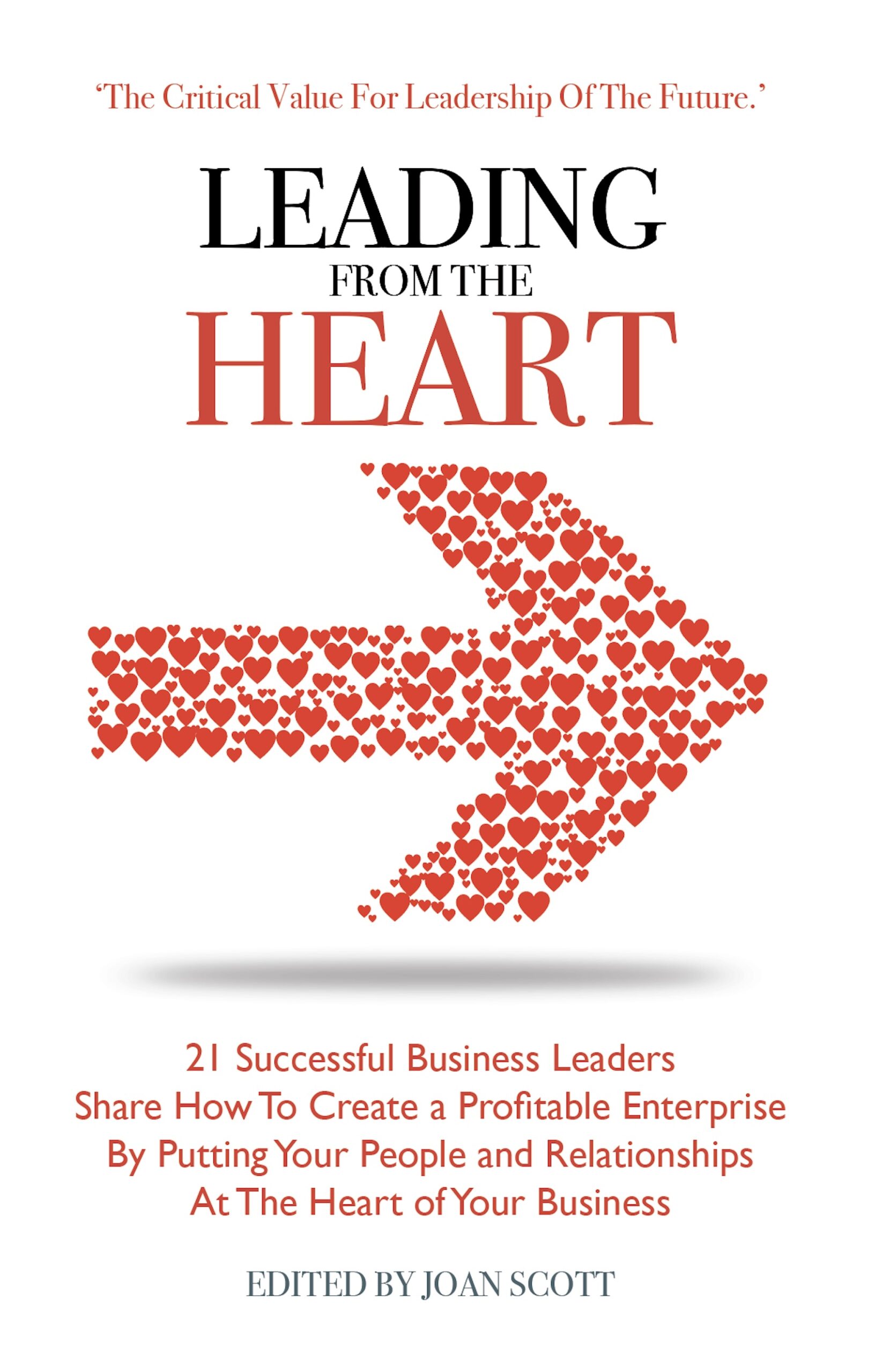
Leading From The Heart – Foreword
LEADING FROM THE HEART – FOREWORD BY FABIENNE GUICHON LINDHOLM
The heart-centered leader – the critical value for leadership of the future
The definition of leading from the heart is subjective to perception, but when I asked ChatGPT for a definition, it gave me this:
“This phrase often signifies a leadership style or approach emphasizing empathy, compassion, and emotional intelligence. When someone leads from the heart, they prioritize understanding and connecting with others on a personal level, fostering trust and collaboration within a team or organization.”
There is no perfect recipe for leading from the heart because leading from the heart is a compilation of many different components that one can use based on the energy of their team member. Each group has a unique way of connecting and producing together. However, we found some fundamentals across the board, which should always be adapted and customized for the unit.
People come in teams with pre-determined experiences, cultures, beliefs, likes, and dislikes. Being a heart-centered leader means discovering how the team functions.
In this book, you will find many interpretations of leading from the heart, and every single one is correct. There’s no judgment to be had; as the reader, you will find your way, connect with particular components, and develop your own philosophy of leading from the heart.
As a global learning and development executive and the author of “Unapologetically Bold – How to Regain Self-confidence Using the Transformation Cycle while Climbing the Corporate Ladder” ” in my opinion, leading from the heart should most likely involve the following.
- – Create an inclusive and safe space where everyone collaborates, helps, and understands each other while recognizing biases.
- – Having empathy and connection through creating a sphere of trust while discovering each other and being furiously curious but never judging and fostering inclusion and understanding while inviting the team to participate as much as possible.
- – Cultivating Self-Confidence by allowing the team to grow, make mistakes, catch each other, reward and celebrate wins while analyzing the pitfalls.
- – Find a common purpose and passion to strengthen the bond between the people and the company or business, keeping the big picture in mind.
- – Establish a culture of open communication without fear of retaliation and focus on discussing good ideas while setting aside the not-so-good ones.
- – By nature, we all crave for growth and knowledge. It is essential to
- offer individuals opportunities, challenges, empowerment, recognition, and value. These key factors encourage personal growth and lead to a better and more productive society.
- – Listen to understand, not to respond. Developing a culture of feedforward is crucial for facilitating a productive and collaborative team environment. Actively listening to your team without interruption is vital to understanding their needs and perspectives. By providing constructive feedback in a positive manner, we can mentor and guide the team towards achieving their goals and improving their performance.
- Last but not least, and possibly the most difficult for most leaders, is to show vulnerability.
In the following pages, you will find many concrete examples similar to the above, all shared with passion and heartfelt experiences.
The beauty and wellness industry needs to improve how it guides individuals and companies. When marketing becomes the defining factor of a company or brand, there is often a gap between how it’s portrayed and what is happening in reality.
Leading from the heart is not a concept; it is a philosophy, and it should not be defined by product market trends but by the people in the organization via HR.
Joan mentioned, at the beginning of the book, the generation gaps. For the first time, we have four generations sharing the workforce now, and each comes with a set of expectations, perceptions, and experiences, so it is time to listen and adapt to stay viable for the world and create a culture of growth, diversity, inclusion with a win-win situation for both employees and employers.
I want to thank Joan for taking this initiative to bring to light what is obvious and to drive awareness of the people’s transformation in an industry that takes care of consumers but rarely of its people.
The Human Factor
The human factor and his feeling, wisdom, and thinking ability are what we need to educate and develop in every one of us. In a digital world with increasing AI technology becoming available in every aspect of life, it is time for humans to rethink their mindsets and develop new attitudes to stay reactive and be fulfilled as a workforce.
One of my favorite futurists, Gerd Leonhard, says the future is about big Blue, Green, and purple. Purple is for humanity. It is all about how we spend our time to be human and go beyond knowledge. Humans must develop elements such as intuition, imagination, and understanding. Using AI to our advantage will provide us with knowledge, and it is the role of humans to understand it—easier said than done, I agree.
How do we become the future in harmony with AI?
I do not have a crystal ball, but we need to become more human and develop our senses. We must be human beings and leave the doings—especially the small tasks—to our AI friends.
AI can do data analysis much better, but it needs a human touch. Emotional intelligence is the attitude to adopt. Why don’t I call them soft skills? There is nothing soft about using an emotional attitude to strengthen the quality of life and workplace.
My son is in finance, and he loves trading stocks. He always says that while AI can analyze data, it cannot predict people’s emotional reactions and humans are needed to understand the data. This means that even in an industry where data analytics is necessary, it requires the human touch.
In my opinion, the following attitude will be required in the very near future of work.
- Curiosity is a powerful force that drives us to discover new things, learn, and grow. It inspires us to ask questions, seek answers, and explore the unknown. With curiosity, we can unlock the mysteries of the universe and achieve great things.
- Creativity provides a channel for self-expression. We validate our thoughts and emotions by expressing ourselves creatively, increasing self-awareness and self-confidence.
- Innovation involves creating something new or finding novel solutions to problems. When you innovate successfully, you experience a sense of accomplishment and mastery.
- Cultural awareness involves being aware, observant, and conscious of the similarities and differences among and between cultural groups. It’s about understanding that our cultures impact and shape how we see the world.
- Self-confidence is an essential ingredient for achieving success in any aspect of life. It is the belief in one’s abilities, qualities, and judgment that enables individuals to face challenges and take risks. Self-confidence is not an inherent trait; rather, it is built upon several factors, including past successes, positive self-talk, taking calculated risks, learning from past failures, and seeking feedback from others. Working on the aspect above will continue to strengthen it.
The points above are just a few; moreover, we must persist in fortifying our foundation.
My workshops cover agility, Empathy, Collaboration, Initiative, Resilience, Kindness, Critical thinking, adaptability, and Purpose, all essential to the future of work and life.
As artificial intelligence (AI) continues to replace specific skills in the workforce, it is becoming increasingly evident that humans must develop additional attributes to maintain their relevance in the future. In other words, the future workforce will require individuals to possess broader skills and competencies beyond what AI is replacing. This means that human creativity, emotional intelligence, critical thinking, and problem-solving abilities will be of greater importance in the future. As such, it is imperative that individuals begin to develop these attributes in order to remain valuable contributors to the workforce and to ensure continued growth and evolution within society.
Contact me here for more details.
BTW the image was created by AI – thanks to Copilot Designer

Stress Relief and Self-Care via Coaching
Stree relief coaching is the immediate effect of coaching
Do you remember how certain songs, movies, or smells can transport you back to a particular time or place or remind you of someone special?
These experiences leave imprints on our minds and shape our beliefs about the world, which can be positive or negative. I call these imprints “belief boxes”. They have a powerful impact on our behavior and overall well-being throughout our lives.
To achieve stress relief, we need to understand how our thoughts impact our mental well-being.
Our thoughts trigger emotions, which in turn lead to our behaviors. We all have automatic survival behaviors (ASBs), also known as belief boxes, that we’ve developed since birth. These belief boxes trigger emotions that we’ve recorded in the past, and those emotions guide us toward a specific behavior. Our brains function like computer files or AI – we create files, fill them with our experiences, and then use our awareness and comparison skills to keep using the same information repeatedly. However, one day, we may realize that this information no longer serves us well, and we need to make changes. But it’s not easy because our beliefs are on automatic setting. We need to change the information in these belief boxes, which can be done through cognitive behavior therapy and coaching.
Under extreme stress, our minds often switch to “autopilot” mode, relying on automatic survival behaviors. This happens because of a biological response that reallocates blood resources differently, ancient survival mechanisms that default to fight-or-flight responses, and negative emotions like fear, disgust, and anxiety acting as “survival mode” signals. While these mechanisms were essential for survival in the past, they can lead to automatic behaviors that may not serve us well in today’s world.
In summary, our automatic survival behaviors are deeply ingrained due to evolution and stress responses. Understanding this can help us develop more adaptive habits and responses in high-pressure situations.
Our brain is a maze where thoughts travel at the speed of light, connecting and colliding.
With Stress Relief Coaching, we can release the burden that comes with that and help clarify thoughts and priorities, reduce anxiety, improve resilience and coping mechanisms, build self-confidence, enhance life satisfaction, and achieve better work-life balance.
During a coaching session, the coach is here to listen and understand. The coachee drives the process of interoception. All the information and solutions needed are there, and the coachee will find them while being triggered by powerful questions.
What, when, how, where, who…
These questions allow thinking, feeling, visioning, planning, and action, and most people have misunderstandings about coaching. It is not the same as mentoring, Counselling, psychotherapy, training, or consulting.
Back in 2006, Green, Oades, and Grant published a study in the Journal of Positive Psychology showing the effectiveness of cognitive behavioral and solution-focused coaching in promoting well-being and hope among clients.
Outside of coaching or in between your sessions, you can apply some self-care tips to enhance the benefits of your program.
- Be curious about the people around you; ask authentic questions which you really want to know about
- Ask for help, and collaborate with your colleague. Support and coach each other
- Meditation allows for the release
- Creativity is finding the child within you
- Visualization is manifesting our dreams
- Flexibility means releasing the control that keeps us so disconnected from our environment, especially in the VUCA ( volatility, uncertainty, complexity, ambiguity) world we live in.
- Affirmation reprograms our beliefs.
- Empathy allows us to be social and have friends.
There are various ways to relieve stress from our body and mind. Massages at a spa can help your physical body, while stress relief coaching can help your mental wellness.
Everyone needs stress-relieving coaching. Check out the coaching packages I offer; they are so affordable that there is no reason to wait!
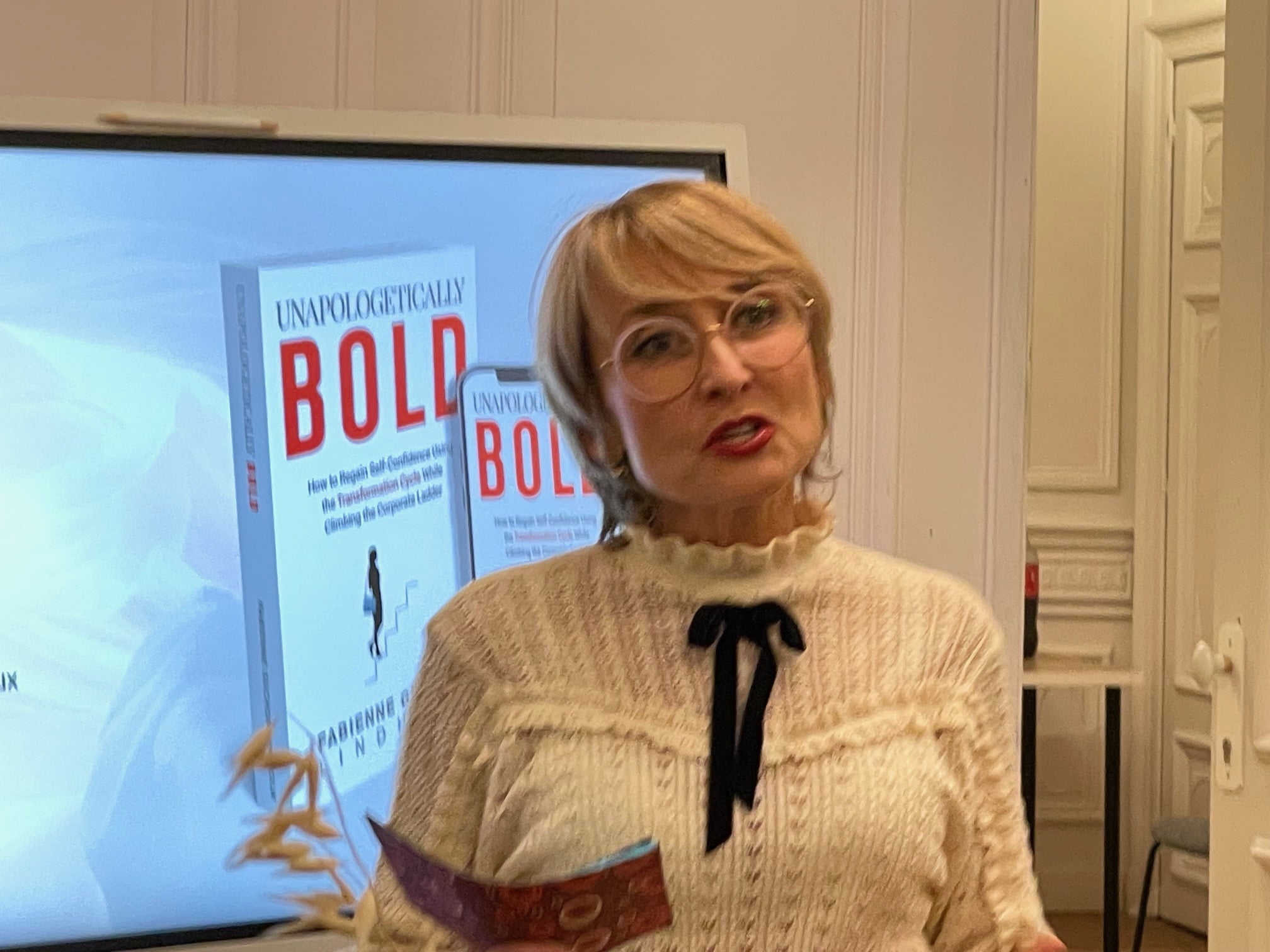
Optimizing Productivity
Empowering Environments through Coaching and the Transformation Cycle
Entrepreneurs and organizations have the objective of being productive and efficient. The bottom line is the driving force behind every company, which means that profits are critical for success. However, focusing solely on profits can be short-sighted. The people working for the company are the ones who lead to productivity and efficiency, and their motivation and passion for innovation are essential components of success. Ignoring these components can lead to a decrease in productivity and profitability.
It is crucial to look beyond the bottom line and assess how the lack of trust, passion, and motivation affects profits. Many companies discuss this issue and plan activities, new compensations, and benefits to address it. However, the solution lies in the hands of the workforce and those working for the company. As the saying goes, “You can lead a horse to water, but you cannot make it drink.” The drinking process comes from within, and the individual will decide to do that.
The challenge is that other aspects of their lives cloud individuals, which need help knowing which direction to take.
It is where individual coaching within the organization can help individuals find their way. Individual coaching allows people to take charge of their path, and L&D specialists can help them find the solution. Once an individual has their “Aha!” moment, the company can facilitate the area of growth most beneficial for both parties. This process fosters talent growth and retention by creating trust and confidence in the organization.
When coaching is coupled with the Transformation Cycle, a company can achieve a more structured path that creates a win-win situation.
The Transformation Cycle uses coaching in the REGROUP phase to bring out desires, needs, and wants, providing clarity to everyone involved. The focus is on creating a safe environment based on curiosity, trust, and self-confidence building, supporting vulnerability and a sense of belonging, and guiding through the process without judgment.
Once clarity is established, the RELIVE phase places the individual in a situation, perhaps in a task force or voluntary project, to understand if this direction will create the best working relationship and productivity. It is a try-out phase, and making mistakes is okay. This allows all parties to implement the previously mentioned desires and needs. Accompagn professionally with a guide, most likely a collaboration between an independent coach and an internal L&D specialist. At the end of this phase, a full recap or evaluation is essential, and both parties agree on the next step.
Finally, the next step is the REMOTION phase. It is grounded on the conversations and agreement of the parties and motions towards a new path for the following year. The parties then put together a plan with the support needed to thrive and be resilient. At that point, trust is demonstrated, and everyone believes in attaining harmony and balance between work and life.
Combining the two factors can create a truly collaborative environment that eliminates bias,
fosters a culture of feedforward, enables two-way communication, and encourages team expression with an open mind. This approach has no downsides except that the parties involved may realize it’s time to part ways. However, this may not be a bad thing in the end. Humans are hardwired to grow, and organizations are made up of humans. Therefore, growth is inevitable, and we should embrace it.
Do you want to prioritize humans in your HR organization? Contact me here to get a plan.
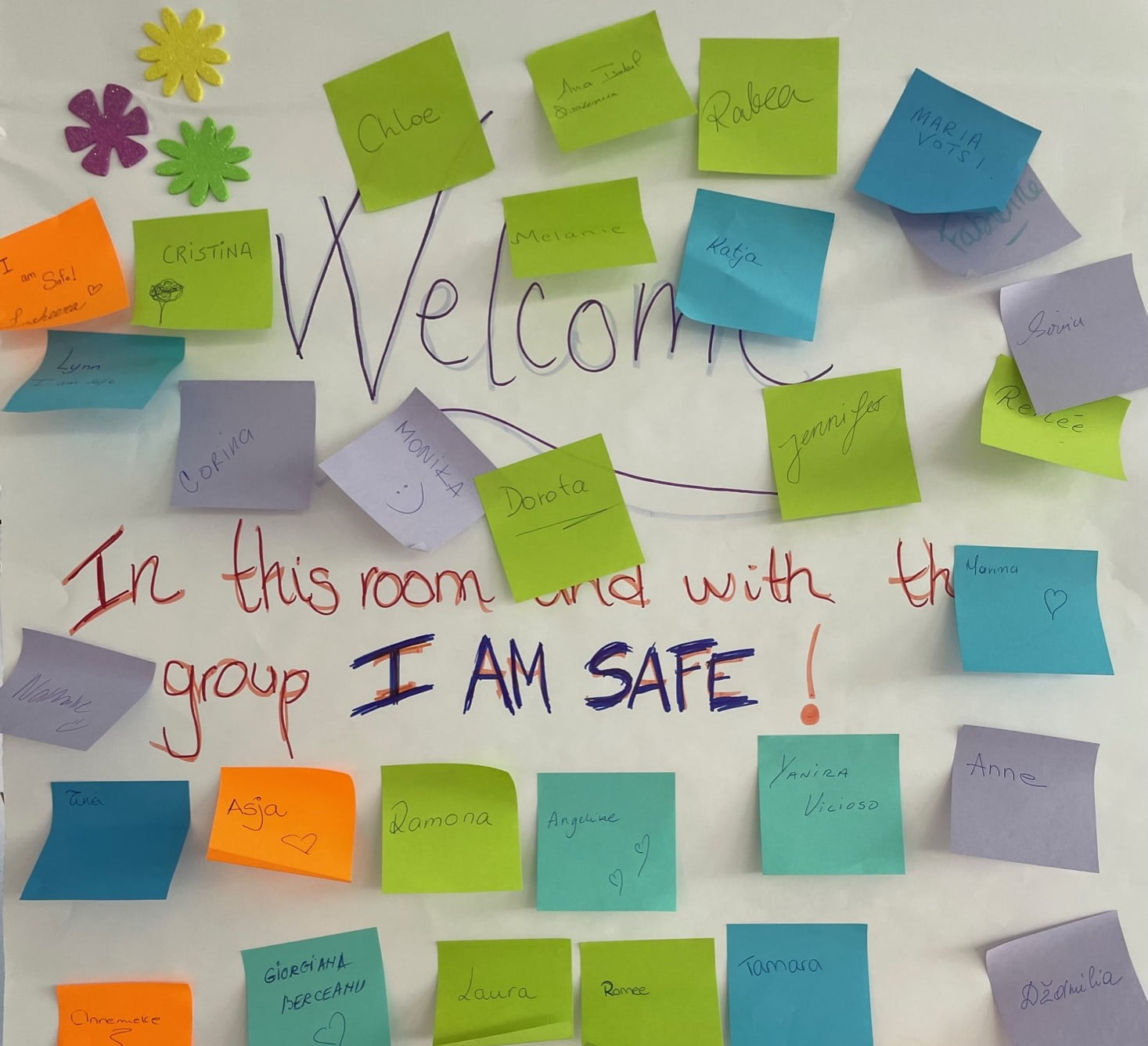
Psychological Safety at Work or the Giving Cycle
Twenty years ago, while being the National Spa Director for twelve locations at Tricoci in Chicago, I presented a management philosophy to a large group of executives in the wellness and spa industry at an industry conference in Las Vegas. Last weekend, as I was cleaning up boxes, I found my notes at the bottom of the pile of paper. It was like a resurgence of thoughts came into my mind. I told myself, “OMG, this is the foundation of what we call today psychological safety at work; I got to renovate this and bring it out of the box.”
The philosophy focuses on four central pillars:
- GIVE TRUST
The reliance on a person’s integrity, strength, ability, and belief in their action’s purpose is reasonable.
- GIVE EXPECTATIONS AND GUIDANCE
Define the values, establish a bond, and guide the company’s boundaries.
- GIVE CONFIDENCE
Provide approval and recognition, offer participation in decision-making, and delegate tasks or responsibilities.
- GIVE FREEDOM
Create a peaceful environment with open communication, non-judgmental feedback, and accessibility to ask questions in a group setting and to leadership.
Giving trust, we know how difficult this can be.
Why not give someone the benefit of the doubt until they prove otherwise? After all, if you hired them, you must have trusted them. Trust is crucial in any working relationship, friendship, or business venture. When trust is established, teams are more likely to share information about their projects and successes, leading to greater motivation, productivity, and a harmonious work environment. Trust must be present within and outside the management team to foster emotional intelligence and psychological safety.
Giving expectations may seem foundational.
It is recommended that a company provides clear values on the first day of employment rather than waiting for the 90-day review or feedback. Defining the organization’s values is crucial to the interview process and helps both parties better understand. This also establishes a bond and creates a balance of power, enabling independent personalities to work harmoniously. Expectations should be defined based on the objectives and goals of the department, focusing on individual strengths and weaknesses to allow for a development path and growth that gives employees a sense of contribution and belonging while achieving their goals.
Giving confidence starts with showing curiosity toward people and ideas,
above all, validating right versus wrong and building regular feedback on what works by strengthening the positive. Praise the accomplishments and thank the effort; human nature thrives on being recognized and rewarded, which allows them to build “belief boxes” that are constructive for their development and the company’s growth. In my newly published book, Unapologetically Bold – How to Regain Self-confidence Using the Transformation Cycle while Climbing the Corporate Ladder, You can find much information about belief boxes. In the end, self-trust and confidence promote Psychological Safety.
Giving freedom is super easy when we meet all of the above.
It’s crucial to foster an environment that encourages creativity and innovation as companies undergo transformation. In the era of AI, we must empower human minds to generate fresh ideas that will help ensure a harmonious future for both humans and robots. Psychological safety can only be achieved when we provide freedom within the workplace.
The modern working environment is changing fast, and because of that, we must add more to this foundation. Promoting diversity of all kinds, addressing bias, and ensuring fairness, as well as expanding cultural competence, need to be inserted in the four pillars or be treated separately depending on the organization’s situation. Psychological Safety will not happen without all of the above!
If you want to learn more or have a consultation, contact me here.
The Transformation Cycle
If you have ever felt that you have not reached your full potential and know there is more, The Transformation Cycle is an easy three steps process that can be used to create your path to a fulfilled life, personally and professionally. The steps are easy to implement and will provide small tips for creating a life strategy and boosting self-confidence. Self-trust comes with finding solutions, achieving new, revisiting old ways, putting things into practice, and trying it out.
The Transformation Cycle is set as Regroup, Relive, and Remotion, which uses the past to move forward, build assurance, and strengthen resilience in a fun and lighthearted manner to give the courage to move into a fulfilling future. It is a great tool to grow professionally and personally. It resets the thinking foundation of each being to make life more balanced.
In my experience, starting with Regrouping and looking back is a very wholesome process.
No need to dwell on the bad experiences of life or the negative people we had around us. Back in 2009, Dr. Jordi Quoidbach, Dr. Alex Wood, and R. Michel Hansenne published in The Journal of Positive Psychology an article and research named: Back to the Future: The Effect of daily practice of mental time travel into the future on happiness and anxiety. This study found that imagining positive future events (which can involve reflecting on positive past experiences) can increase feelings of happiness and reduce anxiety. Participants who practiced mental time travel into positive future events for several minutes a day for one week reported greater happiness and reduced anxiety compared to those who did not engage in this practice.
Regrouping is about experiencing the joy of the past and going as far as when we were five years old, checking pictures and movies and rediscovering what fulfilled us: the activities, the plays, the friends, the sports, and many more.
As children, we naturally let our intuition guide us toward what we enjoy the most and what we are meant to do. We are unapologetically bold and willing to try many things; our brain has “carte blanche,” and we do not have bias, so we are likely to be more adventurous. Regrouping is a blissful time while we go down memory lane and revive forgotten childhood moments that could be revisited, a bit like an old recipe that can be modernized.
Then it is time for Reliving.
However, all those beautiful memories may bring carefree moments. They will put smiles on our faces, sparkles in our eyes, motivation in our hearts, and fuel our brains and heart. This does not mean that we need to drop what we are currently doing, but it suggests that we should relive them and see if they bring joy again. In one of my workshops, one participant said, “At the beginning of my career, I used to volunteer at a professional college to help women find their style in fashion, and I loved this. It gave me such a feeling of making a difference in the world; it was rewarding. I love fashion, but I have completely forgotten about it. I left it aside because I felt that I was not trendy enough, so I should not pretend to be the most fashionista. But you know what? I will relive this and see if that is what I want to re-explore!” She first signed up for a New York fashion show as an on-looker to see if she liked the vibe, the energy, and the concepts; that was her first step to relive. There are many ways to feel joy again; this process is fun.
Relive can be a long process, as most people want or should revive a few elements of the past. It is essential to be thorough before turning on the engine and moving into remotion.
Remotion is the planning step.
Making a list of items to strategize and roll out the timeline, concept, and philosophy. We frame our objectives and goals and interlace them with the moment that brought us joy. We make decisions, some easy and some hard, and we action them, put them in motion. This part is all about perseverance, resilience, and self-trust. Remotion can last for years; in that case, we may need to go back to regroup briefly to define if this is the right path. I believe remotion is the one that requires the most energy. Someone said once: “It is all about the first step” Well, I have to say the first step is essential, but it is all about the momentum of the early stages; one step is not enough.
The Transformation Cycle is the practice of enhancing personal life.
Searching for fulfillment and balance can be challenging; the Transformation Cycle will do just that. As we practice the method consistently, good habits will soon create a new blueprint and bring harmony, balance, and excitement without anxiety. Self-confidence is the pillar to feeling good about making changes and bold decisions and, in turn, feeling good about ourselves, and if we can harmonize the connection between self and life, then a lot can go right.
It is a system for learning and development.
The learning and development landscape is constantly evolving and changing to meet the needs of the employee and organization. There are many ways, such as personalization, digitalization, continuous learning, social learning, and soft skills. The Transformation Cycle should be used to align the professional and personal life to identify an upskilling program. In this setting, such as learning and development, the cycle allows L&D professionals to make sure the path designed by the company is both for the benefit of the individual and the establishment, which should meet the person’s character and add to their personal growth. Growth in the professional environment should be connected to a person’s values and essence. The value of the company and the individual must be in synergy to build a bright and robust future for both parties.
In the age of “the great resignation,” companies are often no longer adequate in how they do training assessments; adding a nurturing and wholesome component to create a more purposeful path with HR professionals can make a big difference in how teams will regard the company they are working with. A study conducted by Deloitte found that personalized learning and interest led to higher levels of engagement, better retention of knowledge, and improved performance. The study also found that employees who received personalized learning were likelier to feel that their employer cared about their professional development.
The good future is about finding moments of real happiness, feeling whole, and concretely being able to put a simple plan to transform your personal and professional life for a most fulfilling existence.

Curiosity and Resilience are Closely Connected.
Curiosity is the spark that keeps us going and alive.
Curiosity drives us to gain more knowledge and information about ourselves, our families, our colleagues, the world, and humanity. Asking questions about everything and anything allows us to be more compassionate, more aware, and more engaged with one another and with ourselves. Asking questions and searching for answers give us the resilience and self-confidence to live more purposefully and foster our core values; it connects us with our deepest selves and surroundings.
Our curiosity is omnipresent in our early childhood; as children, we experience and discover and are the ultimate curious human being until age 5. After, once we attend school, curiosity falls.
Remember how children ask hundreds of questions a day?
As a parent, I remember the conversation with my 5-year-old son, especially in the car. As we were traveling, it would go like this.
“Mom, why are we stopping? Because there is a stop sign.
Why is there a stop sign? Because two roads are coming together, the cars must let each other pass. Can the car do that without the stop sign? Yes, they could, but we have driving guidelines or codes to follow to make it easier for the driver.
What is the driving code? Etc. Etc. And it would go on and on for hours. Yes, it was a bit annoying at the time, my patience is not one of my virtues, and I was not always in the teaching mood, but looking back, it was fantastic that he was interested in learning anything.
Curiosity drives and fulfills self-confidence, allowing us to become more knowledgeable.
Knowledge gives us the essence of being in the know, which builds self-trust. It provides us with the expertise, perhaps in the field we are professionally involved in, the comprehension of concepts, and the skill we need to improve. It gives us the education and the intelligence to make good choices based on facts and data we are interested in learning about. Curiosity initiates all the information we need to stay alive and fit for the future. Curiosity is the future for all of us, as it shapes our way of doing and thinking. In the age of AI, curiosity will drive innovation, resilience, and empathy for humanity to continue to strive.
In a working environment learning and developing ourselves is a must;
we must take additional courses to improve our skills. We often do not question this, and those who do not follow a learning and development path in their professional life can find themselves quickly expired and put on a nongrowth track. Fulfilling and attaining these professional obligations are often seen as normal. Some companies are more demanding and open to a curiosity culture. Still, nevertheless, it seems more normal to search for answers and newness in our professional tracks than in our personal existence.
Being a global learning and development professional, I must entice curiosity. Guiding people on their professional path to discover what could be their next version of themselves takes a lot of reflection and lots of questions to be asked. This process is where personal and professional meet to create harmony between the two. Being happy in a job and career is closely related to the way we feel in our personal life. The roads cross at the moment of feeling fulfilled and accomplished.
Do you want to foster curiosity in your organization, contact me
L’Etat D’esprit, La Disposition D’esprit
Ce matin en me réveillant, je me suis posée la question suivante : comment désire-t-on aller de l’avant? Avec l’état d’esprit ou la disposition d’esprit, est-ce la solution?
Pour construire ensemble notre chemin de croissance, il faut découvrir notre enivrement mais aussi redécouvrir notre INVINCIBILITE.
Pourquoi, allez-vous me dire ? je ne suis pas invincible, seulement les super héros le sont !
Erreur, bien sûr que vous l’êtes ! Si vous lisez cet article c’est que vous avez décidé de prendre les choses en main et de construire ou reconstruire votre confiance en vous
Vous ne seriez pas la si vous n’avez pas envie de faire un pas de l’avant pour vous-même.
Alors, pour pouvoir être dans une bonne disposition d’esprit discutons de ce que c’est L’ETAT D’ESPRIT
Prenez quelques minutes de réflexion sur cette question : qu’est-ce que cela veut dire pour vous ?
Savez-vous qu’il y a deux types d’état d’esprit ? L’ETAT FIXE OU FIGE et L’ETAT D’ESPRIT DE CROISSANCE. Une psychologue et professeur de l’université de Stanford CT aux Etats Unis à observé ces deux mentalités.
L’ETAT D’ESPRIT FIGE,
est un état constant de peur ou de réfection que rien ne peut changer. On reste pareil dans le temps et c’est le refus de voir ou d’essayer de faire des changements pour le meilleur, ou pour le pire.
Savez-vous qu’il est possible de le changer avec des efforts quotidiens?
L’ETAT D’ESPRIT DE CROISSANCE
ou mentalités de croissance, c’est être conscient que les compétences ne sont pas fixes, mais quelque chose que nous pouvons acquérir si nous investissons le temps et les efforts nécessaires.
C’est une mentalité qui nous pousse à croire qu’à tout âge, il est possible d’évoluer, de trouver une meilleure version de soi-même, d’apprendre de croire en ses capacités. Avoir le goût du défi positif qui est essentiel pour sortir de sa zone de confort et de tenter de nouvelles aventures.
Donc c’est pour cela que j’aimerais que vous récitiez quelques affirmations qui vont vous aider à être dans un état d’esprit de croissance aujourd’hui pour vraiment assimiler toute les potentielles potentiel disponibles à votre succès.
PARCE QU’ IL FAUT SE CONVAINCRE D’ETRE INVINCIBLE POUR L’ETRE
- Je veux apprendre et comprendre tous les sujets dont j’ai un intérêt
- J’évolue constamment
- Je crois en mes capacités
- Si je n’essaye pas je ne saurai pas
- Je peux et je veux
- Je suis déterminé(e) à aller de l’avant
- Je suis décidé(e)a affronter mes peurs, je les surmonte
- Je suis volontaire et motivée)
- J’ai tout ce dont j’ai besoins pour réussir
- J’attire l’abondance dans ma vie
Et encore bien d’autres
Répétez les au moins 3 fois, pendant 26 jours. Et contactez-moi si vous avez besoin de nouvelles affirmations personnaliser a vos besoins, pour continuer votre chemin vers votre croissance.

The voices of education
Education is a learning journey full of diverse teachers and masters.
So many different voices allow us to fulfill our connection with knowledge and confidence. As the cliché says: knowledge is power; in my opinion, it certainly is. We can find intelligence in many forms, not only in books, universities, or colleges. It is also about life and experiences that create an impression on our education.
Throughout the years, I have seen people going through the motion of life without being aware and continuing to make the same mistake. However, they had previously learned all this in school or with a tutor. There is a time to learn, and the mind and body need to receive the message. Perhaps it is the moment we realize that we need to make a change, that the pain and feeling of being stuck are too prominent in our lives for us to finally open up and be ready to learn or act.
Sometimes, it is the monetary investment that pushes the awareness of learning. Nevertheless, most of all, it is the different voices surrounding us. What does that mean, the other voices? For example, when parents advise their children, the percentage of this to be fully understood or grasped is moderate, and the same advice given by a parent’s friends or an uncle will have a more substantial impact. This issue is so common and has driven me crazy as a parent. That is what I mean about the various voices, same message, different voices, different impacts.
Let us look at the different voices and the delivery of learning:
The parent’s voice:
This is the foundation of all. Parents must communicate and teach their children. Yes, it is challenging; there is no doubt about that. We, as parents, need to provide advice and live them as an example. Our children at young ages are seriously influenced, and as parents, we must help them search through the information and help them develop core values to make the right choices later.
The teacher’s voice:
This voice is often the most respected and sometimes the only representative of reason because the parent’s voice is absent. Learning in an academic setting is the foundation of education for every human being; unfortunately, it is not the case in all nations. Nevertheless, I am so grateful for institutions such as UWC that spear a global voice worldwide, creating opportunities and scholarships for all, focusing on gender equality, diversity, sustainability, and more. However, the pandemic brought challenges and is creating a new set of demands to be efficient and inclusive to set a high-impact learning system for all. The issue at hand and for the moment, children tend to turn off this voice and do not get the full benefits of the learning process.
The friend’s voice:
This voice significantly impacts our way of thinking of gathering experiences. It may be because of peer pressure or out of kindness and connections. Learning from friends is the most impactful these days, even for adults, because it is generally not a formal setting, and we tend to feel more comfortable with that. Because of that, the importance of choosing friends who will have our best interest at hand is the most crucial.
The media’s voice:
In my opinion, this one is the most dangerous, especially for young adults. In the era of fake news, it is challenging for everyone to navigate the flow of information that feeds our lives. Everything must be triple-checked, especially when it comes to social media. Finding unbiased news is tricky; everyone thinks their opinion is the truth.
In conclusion, we need to teach each other how to navigate the learning forced into our conscious and subconscious minds.
In my case, I have gathered tons of little nuggets of information for years and applied them step by step to my coaching. As a training professional, L&D ( learning and development) in the work environment comes into play and can be more effective as it becomes the experiential voice. In my opinion, experiencing, feeling, and practicing learning is the future, and I will develop this theme in a future blog. Stay tuned for more!
Beautifying aging
Beautifying aging versus anti-aging
With 25 years of beauty industry experience, I have had the message of anti-aging engrained in my mind for many years. Ever since I can remember, anti-aging or anti-wrinkle creams and potions have been the buzzword to create a sense of urgency for women searching for the fountain of youth. Even today, it is still one of the most search benefits by consumers on google for cosmetic products.
Lately, these claims have been under scrutiny from consumers, especially women Genxer and Baby Boomer. As I include myself in this group, they or we know that time is passing, and there is no stopping it.
Everyone on this planet is aging,
It is impossible to halt it. Why waste all this time and energy on something we cannot control? Would it be more fruitful to focus on beautifying and uplifting effects? As I reach my mid-fifties, I often ponder the past and realize that I love every moment of it. I am grateful to be here with my wrinkles and experiences. Of course, life can be challenging, and yes, there are days when I am very critical of what I look like, but I try to remember that some of my friends cannot see wrinkles on their faces as they have left this life too early.
When I was a little girl, I used to hear my grandmother complaining about aging, but she would always finish her sentence by” Well, I guess I am lucky because “so and so” did not have the chance to age,” This has always stuck with me.
So now what?
It is time to change the perception of aging, and it is a challenge; mindset changes are difficult for our society. Even though I know this will take a long time, I am in for this transformation and start beautifying aging!
The first millennials are in their 40’s, Gen X and older generations are dynamic and highly involved with societal transformation. We all have had to make evolutional changes to our way of living; these changes are now part of our DNA.
In my opinion, changing the perception of our outer appearance is the main issue. We know that our experiences, knowledge, and wisdom will and can go a long way; perhaps it is time to start thinking differently, all together, as a group, start connecting and talking a new language.
Here are some of my new thinking:
– Aging is a collection of experiences that makes us whole
– Beautiful skin is skin that is radiant, not wrinkleless
– The perception of being cool can be achieved with an untoned body
– We can have wrinkles around the eyes, but the twinkle inside will always be more powerful
– Grey (hair) is the new timeless tone
Ok, we cannot do this alone. What is the responsibility of the beauty and fashion brand?
– The well-known fashion and beauty label must be the pioneers of this change
– Use models of all ages
– Be authentic with the offering
– Use real people as spoke person.
– Be honest with the expectation and the results
– Hire more mature women and men; changing careers in the ’50s should not be such a burden
I am happy to see some changes are taking place;
Many beauty brands are switching their claims and changing the way they promote their cosmetic products. I have seen this first hand with professional premium brands such as BABOR.
CEW France had a full-day conference in December 2021, called Old is gold. One of the interesting facts is that by 2050, 2 billion consumers will be 60+ versus 600 million in 2020. This fact means more consumers will be pushing for better choices, and businesses are starting to recognize them.
Check this video from a business insider in 2020
How about the responsibility of the media?
– Celebrities must embrace this movement
– Influencers have to be more genuine
– More mature TV anchor or show host
In the end, consumers are the ones that will drive this movement, and every woman on this planet can contribute to this. I will start with my grassroots change and speak for the liberation of our body, face, and soul from this aging prejudice and focus on ways to beautify aging.
Who is with me?

Wellness remake beauty
Or is it beauty that remakes wellness?
The choice to take care of ourselves is individual; it is a decision and a commitment apparent to each of us. Personally, I decided on wellness, but beauty allows me to get there more quickly.
Beauty is fun, light, and colorful, with many rewards. It is the medium, and wellness is the result. Yes, precisely that, we use the easy step of applying colors to our eyes and lips or a mask to make the skin luminous to achieve inner wellness. Some experts say wellness remakes beauty; I say that beauty is the vector to deep-rooted wellness and the new path to mental wellness and health.
They are no wellness without beauty; it is the must step to confidence, well-being, and balance.
In our society, the outer appearances are the most commonly misunderstood tray of personality. That is why beauty has to be part of the path to wellness.
No man, child, and woman will ever feel complete without feeling beautiful or handsome. The wonderful thing is that there are so many solutions to create beauty around us and within us to help us feel whole.
It is also so easy.
Having been in the beauty industry for over 30 years, I have seen what red lipstick can do to a timid smile or a lifeless face. I have experienced what a cream mask can give to dry, dull skin and bring a light of confidence in mature women. I have witnessed young boys and girls with acne that suddenly felt like they could take on the world because their skin looks normalized. I had observed the sparkle in the grandma’s eyes when their eyebrows were shaped, and their regard became more confident. I had encountered the joy of the gentleman when their beard was trimmed and refreshed.
So many little pleasures allow people to believe in their own beauty, inside and outside.
We have all seen the results: Their soul rekindle, their confidence strength, their thoughts assured, their steps lighten, their ideas brighten, their mental refreshed, their posture taller, their voice positive, their opinions expressed, their eyes sparkling, their dream rethought, their relationships strengthen, their smiles joyful and so much more that I am forgetting…
For over 30 years, I have understood what beauty can do to the well-being of people; no matter where they are, where they come from, it is universal and cross-generational, and genders neutral. Beauty is the catalyst to wellness, and it is getting a new focus, new attention, an attention that all people want. Beauty is not an indulgence; it is indeed the foundation to a better us and more inclusive society.
The need for more wellness in our lives is upskilling beauty in general, and it has brought a new light to the actual profound benefit of caring about skin and making beautiful faces and hair.
So what has changed?
1- The consumer wants education to learn more about the how and why which has made the experts come out and tutor more
2- The pandemic has made people take accountability for their wellness
3- A large amount of burnout all over the world have made mental health a priority, and starting with the most outer layer of the skin became an easy start
3- The view on Aging and youthfulness is changing. Women and Men over 50 still show their vitality for carrying fiery life in them and want to be recognized as such
4- Beauty is customizable to everyone’s liking, needs, and budget. There is no downside to beauty…
As quoted by neuroscientist Dr. Claudia Aguire:
“We need beauty in our lives; it brings hope, connectedness, and ultimately wellness” I cannot agree more with this, and I have been living this since I was 14 years old. Beauty is part of wellness! End of the story!
Contact Fabienne for more beauty tips
Mental wellness versus mental health, the new subtilty.
Mental wellness and mental health are strongly connected, but when someone from my LinkedIn network posed this question, it had me thinking.
I think there is a difference between the two; for one, I think we have complete control of our wellness, mental wellness, to be precise. We have the power, but we are unaware of mental clarity, but it is easy to find daily solutions with research. Actually, most of the time, we are the ones sabotaging our mental balance.
Here are a few solutions that I would like to point out
-
The faculty of Letting go
Letting go of the things we do not have control is the key to a clearer mind. This is a dynamic action where we agree to stop controlling every activity in our life. It allows certain things to happen on its own, ceasing to hold a tight grip on life. Letting go is a result to open for life to happen and to enjoy it.
Speaking to ourselves is undoubtedly something we all do. Still here, it is about being nice to our being and finding positive messages about our physic or our brains to say out loud, daily, and without shame. Try it; you will be amazed at what it can do to your inner mood.
-
The art of doing nothing
Yes, sitting around and dazing is good for your mental health. Our brains need to disconnect from everything occasionally, so just sitting and gazing at the trees or the sky will bring a sense of harmony and release. My recommendation is to find at least 10 to 15 min a day to do that.
-
La respiration or breathing
Conscientious breathing is incredible once we discover it. Not only it helps mentally, but it essential to our physical body. It can regulate vital organs, oxygenate the muscles deeply for better sports performance, and much more.
-
The visualization
Visualization is a bit like dreaming, imagining ourselves in a gratifying situation, accomplishing goals and aspirations. Creating a new purpose to bring hopes and desires into reality. When coupled with an affirmation: visualization is hugely successful.
The question asked in the post was about an employer supporting their employee while going through hardship at home.
In terms of the company offering support, in my opinion, they should provide mental wellness to their employees and workers. Sometimes all it is, is an ear to listen, with a few remedies. A company should not be using guilt on their people when they are entirely aware of the problem. The recommendation could be anything that one can do themselves until it is time to seek counseling.
In my opinion, the fine line between mental wellness and mental health is where the person cannot take control of their equilibrium. When all the self-care is not working, the DIY is not providing the release or the stress relief intended; it is time to use professional counseling to go into the root of the problem and give superior and more targeted answers.

The return to the office
Four basic steps to create a harmonious team return to the office
As we are slowly looking for a return to the office for all medium to large companies, we need to ask ourselves what work-life would look like after an extended home office. As of today, most of the large corporations have had their complete teams working from the home office for over a year.
Are companies going to invite back their workforce as nothing happened? Can people pick up their stuff, walk back in the office, take their old desk space, and start working? Are human resources ready to have their employees back? What kind of preparation is needed? I believe before anything happens, one should ask themself: HOW do we make the return smoothly?
Has anyone heard of such preparation?
For myself, I have not heard any company talking about this. I truly hope someone is thinking and preparing a solid plan to return all their departments and their people to their offices.
I am convinced that no one can return without proper guidance on how to connect back with the team and the projects. During this long year of distance working, most people have developed their home office habits. Keep in mind that it only takes to do something 26 times to create a new pattern. At this rate, we are way beyond a new habit. Now those work habits are anchored in everyday routine.
It is urgent to develop plans and steps to welcome back all the workforce
Easing them into a new workflow to create harmony within the teams is a more proactive versus chaotic, “hope of the best” approach. Moreover, this is the perfect opportunity for a corporation to refine the way to work. Create a better workflow that management and people alike can develop together. What is that plan? Where do we start?
I see four steps:
-
Emotional Anxiety checkup:
In my opinion, this must be the first step. Recognizing the emotional turmoil that the team has gone through. At worst, someone may have lost close friends and family during the pandemic, and at best, someone feels lost on what to do next. My recommendation would be a workshop where people can express themself, their feelings and find solutions to comfort each other.
-
Regroup the work process:
For my part, redefining the workflow is a must, and everyone needs to be involved. The more the team has to say about it, the more straightforward for the management. Propose a workshop where each group can discuss what worked during the home office and what did not. The result of the workshop could be so rewarding for the team to be able to design their workflow based on their experiences.
-
Define objectives:
Find agreements together on the goals and the strategies toward a common goal. These agreements could be beneficial and fulfilling for the team to connect and find solutions as well as refine the work culture.
-
Remotion, move forward:
Now the team is ready to start moving forward and have a clear view of how they will be working together. The team member is clear about their new position in their old environment.
Preparing for the return to the office and the workforce should be a refreshing start for everyone involved.
If not planned properly, this could be a disaster for many talented people and trustworthy companies. Do not underestimate what months of isolation and home office work have done to the human character.
Investing time and compassion in the people can only be favorable
It may seem like taking a step back, but on the contrary, it is taking action forward. The people will feel so much more at ease and will be forever grateful that the company took the time to help them re-integrate into a new workflow as it is a must for a successful future of all parties.
Need a moderator and facilitator for the return to your office, click here

A feminist, am I a feminist?
In my opinion, they are no short answer to this question.
A few months back, someone asked me if I was a feminist, and I have to say it took me a few minutes to respond. I was born in the late ’60s, feminism had another meaning then or perhaps another role. There was a lot of anger then, and in general, for me, the word itself always felt negative, not inclusive, and one-sided.
In the ’60s, the feminist movement was very radical, a bit of hatred toward men, perhaps it was necessary then, but in 2021 I do not think we need this drastic way of thinking. In my view, when someone asks, are you a feminist, it most often brings me back to that time, which my answer would have been no. The radicalness of the movement created a division between the group, and even today, we can feel the gap still being here. Indeed my 16 years old son mentioned something of that matter some time ago. Feminism should be unifying the groups to improve women’s conditions all over the world, not dividing them.
Time has changed and in terms of feminism,
I would describe myself as such but with a slight nuance: women cannot achieve what they want without men. I am a mom of two boys, I have been around the masculine gender all my life, husband, brother, sons, and even my cats have all been male. In my professional life, I have worked with many men executives. However, being in an industry populated mainly by women, we cannot avoid collaborating, negotiating, and conferring with the other gender.
I think being a feminist is educating people,
I believe it must start with boys and men. As a mom, I presume we have more chances with boys, and it is easier and faster to create new believes with the young generation than the older one. Nevertheless, teaching men respect and self-respect is the foundation of all. As women and mothers, we are responsible for teaching those young men the relation with their female counterparts and how to treat everyone equally. The responsibility of fathers is also very grand; their teaching must mirror the one led by women.
As women, we also necessitate to have self-confidence, and men need to strengthen those beliefs by supporting our cause, working with us, standing up for our rights, and working hand and hand with us. I believe this is not just a woman’s cause. It is humanity’s cause. That is why I love the “He for She” movement, and this where I would like to dedicate time, effort, and money in the future so we can build a wholesome world where men and women can have equal rights.
Equals rights are what we need to focus on and not to be equal.
Men and women cannot be equal; scientifically and anatomically speaking, we will always have our difference. We need to accept our diversity and embrace our uniqueness, but we need to have equal rights and gender equality on every professional, political and personal level.
In conclusion, to answer the question, Am I a feminist? I will answer yes if we all work together to improve the relationship between men and women worldwide.
Learn more about Fabienne
La respiration consciente pour vivre mieux
Notre respiration est gérée par notre système nerveux végétatif, ce qui signifie que nous respirons instinctivement. « Génial » vous me direz, mais, en fait, pas nécessairement. Comme la respiration est automatique nous la tenons pour acquis, est nous utilisons notre diaphragme que pour survivre mais pas pour stimuler notre santé.
Il est grand temps de se concentrer sur nos capaciter respiratoire et de les augmenter en trouvant la bonne posture, ainsi que la bonne cadence.
La respiration joue un rôle capital tant sur le plan physique que sur le plan émotionnel. Apprendre à rendre sa respiration consciente permet de donner à son corps et son esprit une sensation de bien-être, ainsi qu’une source vitale d’énergie qui peut redonner confiance en soi.
La respiration est également un outil pour lâcher prise, laisser aller et se relaxer.
En se concentrant sur notre respiration, nous canalisons notre mental et l’apaisons ensuite pour gagner en lucidité.
Catherine Daniels, sophrologue certifiée, confirme que les exercices de respiration pratiqués en sophrologie apportent des bénéfices corporels et émotionnels comme la sérénité, la joie, la patience ainsi qu’une plus grande tolérance de son entourage. Ils apportent également des valeurs de paix, liberté et dignité à ceux qui les pratiquent.
La respiration peut être accompagnée de la visualisation : les pratiquer simultanément en imaginant que l’on se remplit d’une énergie pleine de bonheur et de douceur pour se dynamiser, peut être le début d’une routine journalière. Ces techniques sont également très bénéfiques pour réguler le sommeil et donner à notre corps un repos complet et profond.
Comment devez-vous respirer ?
Etirez votre diaphragme en utilisant des exercices de yoga ou d’étirements, afin de trouver une bonne posture pour respirer sainement et améliorer l’oxygénation de l’organisme. Vous pouvez pratiquer à tout âge ces étirements du haut du corps, en vidant les poumons, rentrant le diaphragme et en levant les bras vers le haut.
Essayons ensemble :
1-Tenez-vous ancré(e)s sur vos deux pieds à plat au sol
2-Etirez les bras vers le ciel, sortez votre poitrine, gonflez votre ventre bien. Ensuite, relâchez en poussant l’air tout en pressant votre estomac
3-Ressentez la sensation de légèreté
4-Répétez 2 fois par jour 5 minutes à chaque fois
2021 étant l’année du bien-être
Il est temps de prendre soins de soi, de gérer notre santé physique et mentale, de s’investir dans notre bien-être : 10 min de temps pour soi sont dérisoires. Et si l’on attend que quelqu’un s’occupe de nous, nous pouvons attendre longtemps !
Il est temps de respirer consciemment, en se recentrant sur son souffle. Cette respiration essentielle apportera du bien-être, de la concentration, de la relaxation, de la récupération et bien plus encore. C’est un souffle de vie, à chacun.
Joiniez vous a notre evenement le 7 mai 2021
REF : Vital magazine décembre/janvier
Agile and agility, is this a trend?
Wow, did we become agile in the last months or not!
In the last year, most of us have been confronted with obstacles, professionally, personally, and emotionally.
Learning to be agile is not an easy task. I am always so impressed how cats are physically agile; they are beautiful to watch, and no matter what the situation is, they always land on their paws.
It is not quite the same for us humans, but even if we do not land on our feet right away, we will end up back on our feet eventually. That is agility and what matters is the result.
You are probably asking yourself, what is the definition of agility?
According to the Cambridge dictionary, it is the ability to move quickly and easily around a situation and negotiate obstacles for the best outcome.
Negotiating obstacles…negotiating is the keyword here, NOT avoiding. As life throws many challenges, we have to look at these obstacles as they come, and we need to negotiate to learn how to work with and around them. Like negotiating a turn on the road with a car, we usually see it coming; we slow down and adjust the wheels to correctly assess the turn before accelerating. The same applies to life, slow down, assess, think, adjust your position, accelerate and go…
If you are alive today and are making plans or working and living fully (or as much as our governments allow us to), YOU are agile.
This is the only way to thrive, and no, it is not a trend; it is here to stay.
Of course, it is not easy, we all have been out of our comfort zone for some time, and it is only normal that we feel discouraged and exhausted. Our anxiety levels are heightened more than ever. On the other hand, we should pat ourselves on the back because we have been agile! We have been flexible enough to adapt to the situation, perhaps rapidly. Our mind is thinking in a subtle yet and spirited way to discover solutions. Sharpness is certainly the new normal. These are amazing qualities, and we have been pushed to acquire them, but there is one thing that is slowing us down, and it is identifying the potential obstacles.
Identifying obstacles is the number one issue!
Most of the time, they are in our faces and really close to us, but because they are part of the daily routine because they have carved a place there, it is hard to see and recognize them. Detecting and pinpointing them takes time and willingness, and once uncovered, the world opens up to us.
Within the transformation cycle, we work together and use techniques to Regroup, Relive, and Remotion. By identifying the obstacles, negotiating, and analyzing how we turn the challenges into opportunities, the solutions will open themselves to you.
Come and regroup with me and become a master at being agile.
Curious? Get in touch with me here.
A little more about me…
My friends describe me as an inspiring leader with an analytical, visionary & critical personality.
But the real question is, how would I describe myself? Hmmm…
First, my heart is French, but I lived in the United States for so many years, and I would say my head and mind would be very American. Most people that meet me would immediately think I am American. Thinking back to the beginning, I can say that my childhood as a small-town country girl living in the mountains of the Haut-Jura gave me the grounding I needed to stay focused. I started to ski at three years old, and I always enjoyed being outdoors to reflect on my thoughts. In my teenage years, I quickly realized that long-term studies were not for me. My heart was with people; I always loved giving advice, and that is when the skincare industry opens its door to me. It felt perfect… 30 years in the skincare industry!!! Wow, this has certainly taught me to listen to people, assess the issues at hand, and find the best solutions. I genuinely love that; it makes me happy when the solution is found.
I have applied my listening skills and solution-driven approach everywhere around the world.
No matter where I was, in the French Alps, Paris, Chicago, Beijing, Kuala Lumpur, Montreal, and many more places worldwide, guiding my audience toward a solution has fulfilled me.
Although skincare is a passion of mine, and I absolutely love giving authentic recommendations, sharing knowledge became more important to me; that is when the industry’s education section allowed me to inspire people.
For the last 15 years,
I have coached hundreds of young and mature professionals to define their paths. Inspiring confidence is my mento, and it is impossible to teach without inspiring the individual first. Every day I wake up and ask myself how I can inspire people or anyone around me for that matter.
As an authentic and bold speaker, the values that I have learned with my world experience are the pillar of who I am and what I have to offer.
I will never say something just to be nice… My guiding philosophy is: ”if you do not have nice things to say, just do not say anything at all.”
Authenticity is one of my values interlaced with so many more that I will share in the future.
See more about Fabienne.